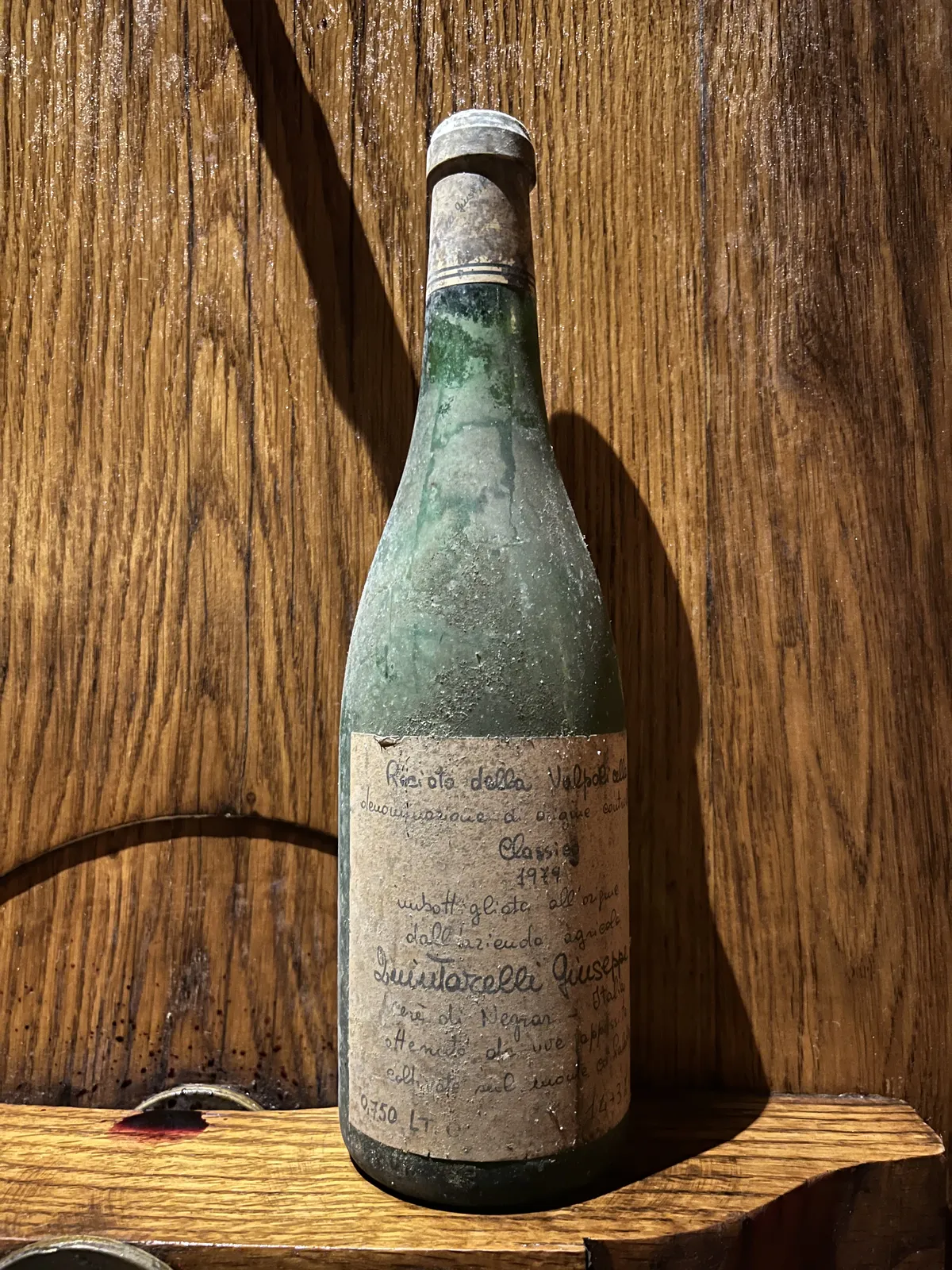
Recioto della Valpolicella is a sweet red wine made from the same dried grapes as Amarone, but with fermentation stopped before all the sugar converts to alcohol. It is the historic ancestor of Amarone, holds DOCG status, and is now the rarest wine of the appellation. This guide explains how it is made, how it tastes, and why it matters more than its tiny production suggests.
Ready to plan your trip?
Let's design your perfect Italian wine experience
Every tour is tailor-made. Reach out and we'll craft an itinerary that fits your pace, your tastes, and your story.
One decision separates it from Amarone
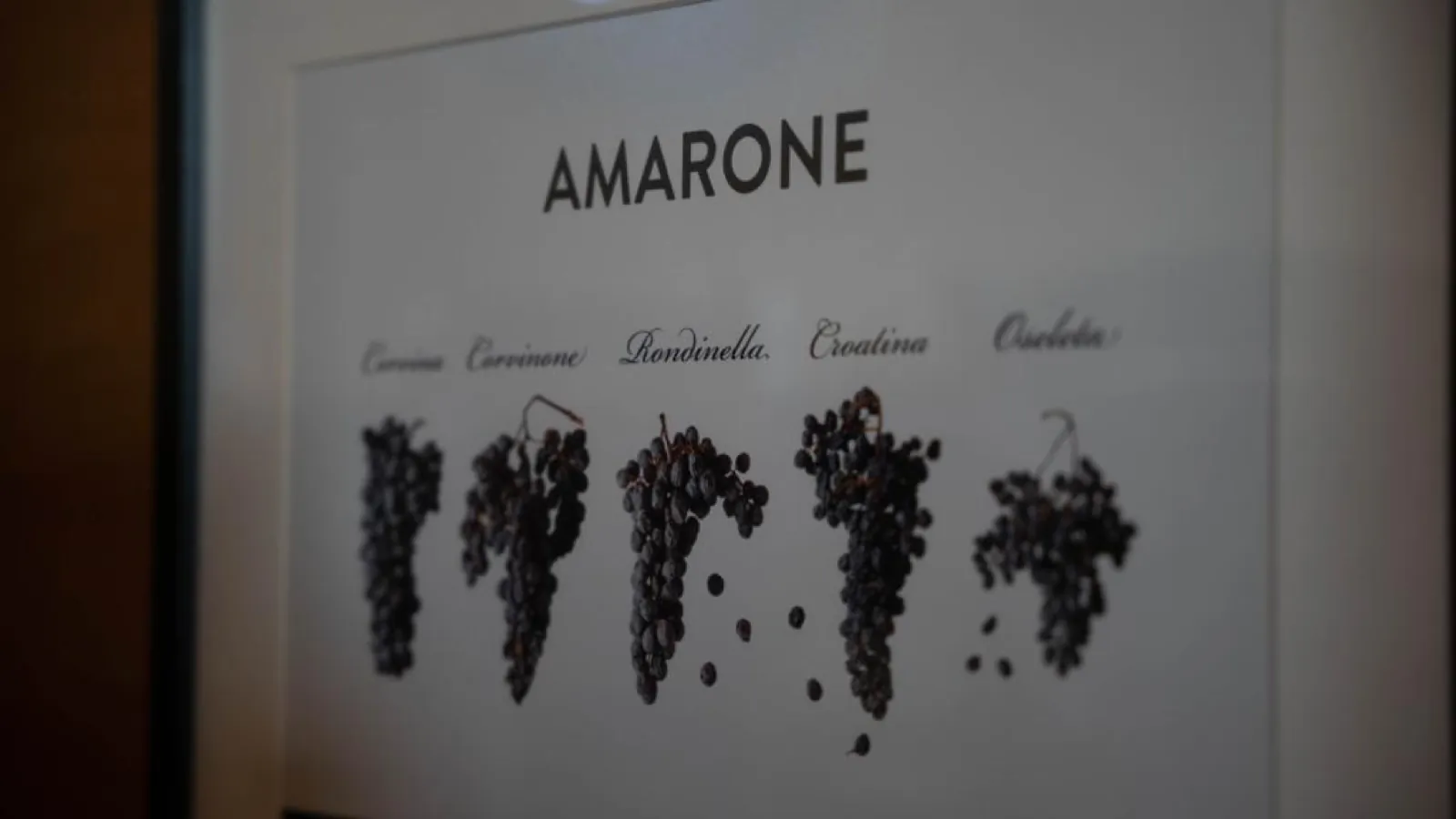
The two wines begin identically. Corvina, Corvinone and Rondinella grapes are dried in a fruttaio for roughly 100 to 120 days, losing about a third of their weight, then pressed into a highly concentrated must.
Everything then hinges on a single choice:
- Stop fermentation early — sugar remains, and the wine is sweet. That is Recioto.
- Let fermentation finish — sugar converts to alcohol, and the wine is dry. That is Amarone.
Same fruit, same drying lofts, same cellar. One decision, two completely different wines. Our appassimento guide covers the drying stage they share.
Which came first
Recioto is the older wine by a wide margin, with roots traceable to antiquity, when drying grapes was a practical way to concentrate sugar and preserve fruit through winter. For most of Valpolicella’s history, Recioto was the region’s great wine.
Amarone arrived comparatively recently. The region’s own account holds that it began as a Recioto whose fermentation was left running too long, producing a dry wine considered spoiled at the time — bitter, amaro. The mistake became the appellation’s most celebrated product, and the original was pushed to the margins.
There is a certain irony in the fact that the wine which built Valpolicella’s reputation is now the one most visitors have never tasted.
What it tastes like
Dried cherry, fig, plum jam and chocolate. Sweet but rarely cloying: the natural acidity of Corvina holds it upright, and there is enough tannin to give structure. That balance is what separates a good Recioto from a generic sweet red.
Serve it slightly cool, 14 to 16°C, in a small glass. It is rich enough that a modest pour goes a long way.
What to drink it with
Chocolate desserts are the classic match — the wine has enough sweetness and cocoa character to meet them head-on. Dried fruit and nuts work well, as does the Veronese Christmas pandoro. It also stands up to strong blue cheeses, where the sweetness offsets the salt.
Why you rarely see it
Production is very small. Recioto consumes the same expensive dried grapes as Amarone but sells into a far narrower market, so most producers make a few hundred bottles at most, and skip it entirely in weaker vintages.
That scarcity is exactly why it belongs at the end of a cellar visit. Most tastings finish with it, and for many guests it is the surprise of the day. Our Taste of Valpolicella tour includes the full progression, and the Valpolicella wine tours guide covers planning the visit.
Frequently Asked Questions
What is Recioto della Valpolicella?
Recioto della Valpolicella is a sweet red wine made from the same dried grapes used for Amarone, but with fermentation deliberately stopped before all the sugar converts to alcohol. The result is rich and sweet rather than dry, usually 12 to 14 percent alcohol. It holds DOCG status and is the historic ancestor of Amarone.
What is the difference between Recioto and Amarone?
Both start identically: grapes dried for months, then pressed. The difference is when fermentation stops. Recioto is halted early, leaving residual sugar and a sweet wine. Amarone ferments to completion, converting that sugar to alcohol and finishing dry. One decision, two entirely different wines.
Why is Recioto older than Amarone?
Recioto is the traditional wine of the region, with roots traceable to antiquity, when drying grapes was a way to concentrate and preserve them. Amarone emerged much later, by the region's own account from a Recioto whose fermentation was left to run too long. The dry accident became the famous wine, and the sweet original became the rarity.
What does Recioto taste like?
Dried cherry, fig, plum jam and chocolate, with a sweet but not cloying palate held together by fresh acidity and light tannin. Good Recioto avoids syrupiness — the acidity of the Corvina grape keeps it balanced, which distinguishes it from many sweet reds.
What do you drink Recioto with?
Classically with chocolate desserts, dried fruit and nuts, or the Veronese Christmas cake pandoro. It also works against strong blue cheeses. Serve it slightly cool, around 14 to 16°C, in a small glass — it is rich enough that a modest pour is plenty.
Why is Recioto hard to find?
Production is tiny. Recioto uses the same costly dried grapes as Amarone but sells into a much smaller market, since sweet reds have narrower demand than dry ones. Most producers make only a few hundred bottles, and many years none at all, so it rarely leaves the region.
Planning a trip?
Get the free 3-day Valpolicella plan
The itinerary we'd build for a first visit — yours by email, plus occasional guides from Verona. No spam.
No spam, and we never share your address. Unsubscribe any time.