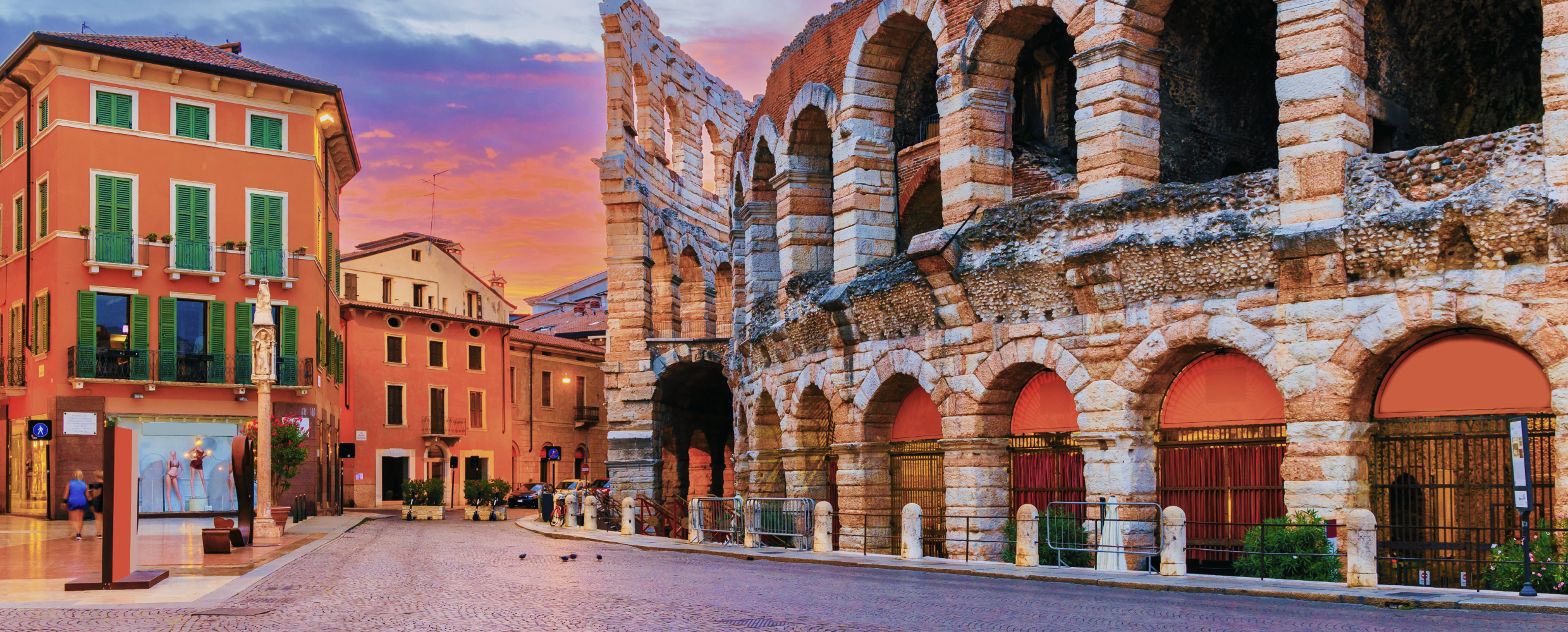
The Arena di Verona has two kinds of seats — chairs on the Roman floor and stone on the Roman tiers — and every ticket tier is a version of that choice. Here is the seating plan in plain language: what each sector is, what it costs, and which one is right for the kind of night you want.
Ready to plan your trip?
Let's design your perfect Italian wine experience
Every tour is tailor-made. Reach out and we'll craft an itinerary that fits your pace, your tastes, and your story.
The map in one paragraph
Stand on the arena floor facing the stage. In front of you, the poltronissime — central blocks of armchairs, the priciest seats, gold-labelled at the front on premiere nights. Around and behind them, the poltrone — same chairs, same flat floor, friendlier price. Rising all around, the Roman gradinata: the central arc facing the stage is numbered stone (assigned places on the original tiers), and everything higher and wider is unnumbered stone — first come, first seated, the cheapest and oldest seats in European show business.
Sector by sector, honestly
Poltronissime — for the voices
The central stalls exist for one audience: people for whom the singing is the point. You hear breath control, orchestral detail and stage direction at a resolution the stone cannot match, and on premiere nights you share the floor with the dressed-up crowd. Cost: the top of the house — €150 to €250+, more for gold blocks on galas. If this is a once-in-a-lifetime night and opera is why you came, spend here.
Poltrone — the floor without the premium
Same flat floor, no climbing, a frontal if slightly longer view. This is the right call for anyone who wants chair comfort — backs, armrests, easy access — without the headline price, and the sector to book if steep stairs are a genuine concern, since you reach it without climbing a single Roman step.
Gradinata numerata — the value pick
Numbered places on the central stone tiers, facing the stage straight-on from roughly stage height. You give up the chair and keep almost everything else: full production view, the amphitheatre around you, half the stalls price. Bring or rent a cushion and a layer for midnight, arrive 45 minutes early, and you have bought the best price-to-experience ratio in the building. If you book one sector on this page’s advice, book this one, central.
Gradinata non numerata — the experience
The high and wide unnumbered steps are not a compromise — they are a different product. You arrive early (up to two hours for a central perch), you picnic, you watch 13,500 people fill a Roman amphitheatre, and at dusk the candles are lit beneath you before the first note. Hardest marble, steepest climb, lowest price, biggest memory. Right for the mobile, the young, the romantic and anyone treating the night as an event rather than a concert.
Choosing by what you care about
- Sound and detail first: central poltronissime, then poltrone.
- View of the whole spectacle: upper central stone — numbered if you want certainty, unnumbered if you will invest the early arrival.
- Comfort and access: poltrone — flat approach, real chairs.
- Budget: unnumbered stone plus a rented cushion beats a distant lateral numbered seat at twice the price.
- First time, no strong preferences: central gradinata numerata. Nobody has ever regretted it.
Three physical facts the seating map won’t tell you
- The steps are knee-high and worn smooth. Getting to upper stone sectors is a real climb, done again in the dark at midnight. Footwear advice — and everything else about dressing for marble — is in the Verona opera dress code guide.
- The stone cools before you do. Whatever the sector, the midnight layer applies; on stone, so does the cushion.
- Laterals compress the stage. In both numbered and unnumbered stone, a central position one tier higher beats a lateral position one tier lower. Prioritise the arc over the row.
Make the seat the end of a perfect day
Whichever sector you choose, the curtain is at 21:15 and your afternoon is free — and this is Valpolicella. The way to arrive at your seat is rested, fed and faintly glowing from an afternoon of Amarone in a family cellar fifteen minutes from the city: that is exactly the day our opera-night wine day builds, with a guaranteed return to Verona by 18:30. For tickets, timings, rain rules and the rest of the night’s logistics, see the complete Arena Opera Festival guide.
Frequently Asked Questions
What are the best seats at the Arena di Verona?
For pure sound and production detail: central poltronissime on the floor. For the best balance of view, atmosphere and price: central numbered stone (gradinata numerata) facing the stage, roughly level with or slightly above the stage line. For the experience itself: the upper unnumbered steps, where the whole amphitheatre, the stage and the candle-lighting spread out below you.
What is the difference between poltronissime and poltrone?
Both are proper chairs on the arena floor. Poltronissime are the central front blocks closest to the stage — the most expensive seats in the house, with gold and platinum sub-tiers on premiere nights. Poltrone sit behind and to the sides of them: same flat floor and the same type of chair, meaningfully cheaper, with a slightly more distant but still frontal view.
Is the gradinata numerata worth it over the unnumbered steps?
If you want to arrive twenty minutes before the curtain rather than two hours, yes — the assigned place is exactly what you are paying for. Numbered stone sectors also sit in the central arc with a frontal view of the stage, while unnumbered ticket-holders who arrive late end up high on the sides. For couples and anyone over fifty, the upgrade usually pays for itself.
Are the unnumbered stone steps any good?
They are the soul of the Arena. You sit where spectators sat two thousand years ago, the view from the upper tiers is panoramic, and the price is the lowest in the house. The costs: you queue, you arrive up to two hours early for a central spot, the marble is hard (rent the cushion), and the steps are steep. For anyone mobile and willing to make an evening of it, they are the right first-time choice.
How steep are the steps at the Arena di Verona?
Genuinely steep. The Roman gradinata rises quickly — each step is knee-high — and the stone is worn smooth. Fine for anyone reasonably mobile, but if stairs are a concern, book poltrone on the flat arena floor, which are reached without climbing, and avoid the upper stone tiers.
Where does the sound carry best in the Arena?
The Arena's acoustics are famously even — the amphitheatre shape does the work, and opera nights are unamplified or nearly so. Voices are most present on the floor and the lower central stone; the upper tiers trade a little vocal detail for the full visual sweep of stage and orchestra. There is no bad-sound sector, only this trade.
How much do Arena di Verona opera tickets cost by sector?
Rough bands, varying by title and night: unnumbered stone from about €30, numbered stone roughly €60–€100, poltrone around €100–€160, poltronissime from about €150 to €250 and beyond on gala and premiere evenings. Buy at arena.it to see the live seating map per date.
Do I need to arrive early if I have a numbered seat?
Forty-five minutes before the curtain is plenty: time for the bag check, finding the sector entrance, and the candle-lighting at dusk, which you do not want to miss. Only unnumbered stone rewards the two-hour arrival — that is where position is decided.
Planning a trip?
Get the free 3-day Valpolicella plan
The itinerary we'd build for a first visit — yours by email, plus occasional guides from Verona. No spam.
No spam, and we never share your address. Unsubscribe any time.