What Does “Authentic Italian Food” Truly Mean?
Italian food is one of the most recognized — and most misunderstood — cuisines on the planet. Ask someone what they picture, and they might describe a towering plate of spaghetti and meatballs, or a breaded chicken breast smothered in tomato sauce and melted cheese. Both dishes are beloved comfort foods, but neither exists in any traditional Italian kitchen. They are Italian-American inventions, born from immigrant creativity and adaptation, not from anything you’d find in Rome, Naples, or Bologna.
So what is authentic italian food, exactly? The honest answer is that it’s less about any single recipe and more about a philosophy. Three core principles define it: simplicity, high-quality seasonal ingredients, and an unwavering respect for regional identity. Italian cooks — from the home cook channeling her grandmother’s instincts to the trattoria chef in a small Umbrian town — tend to use fewer ingredients, not more. They let those ingredients speak for themselves. A ripe San Marzano tomato, a pour of cold-pressed extra virgin olive oil, a handful of fresh basil: that is a sauce. Nothing else required.
This philosophy has a name in Italian food culture: cucina povera, which translates loosely as “peasant cooking” or “poor kitchen.” It refers to the tradition of making extraordinary food from humble, locally available ingredients. Far from being a limitation, cucina povera is the engine behind some of Italy’s most celebrated dishes.
Ready to plan your trip?
Let's design your perfect Italian wine experience
Every tour is tailor-made. Reach out and we'll craft an itinerary that fits your pace, your tastes, and your story.
The Soul of Italy: A Journey Through Regional Cuisines (Cucina Regionale)
Here is something that surprises many visitors: there is no single “Italian cuisine.” Italy only unified as a nation in 1861, and before that, it was a patchwork of city-states, kingdoms, and republics — each with its own dialect, culture, and food traditions. Today, those 20 distinct regions still cook very differently from one another. Geography shapes everything: the cold, foggy Po Valley produces rice and cattle; the sun-drenched Sicilian coast offers capers, swordfish, and citrus; the Apennine mountains yield truffles, lentils, and aged pecorino.
Understanding this regional diversity is the single most important step toward understanding what real Italian food is.
Northern Italy: Butter, Rice, and Rich Stews
In the north, olive oil often gives way to butter. The landscape — flat, fertile, and Alpine — produces dairy, corn, and short-grain rice in abundance. This is the home of polenta, the golden cornmeal porridge that has sustained northern communities for centuries, and of risotto, the slow-stirred rice dish that demands patience and good stock.
Risotto alla Milanese from Lombardy is a perfect example of northern cooking at its finest: Carnaroli rice, saffron, bone marrow, white wine, and a generous finish of butter and Parmigiano Reggiano DOP. The result is rich, golden, and deeply satisfying.
Further west in Piedmont, the cuisine is bold and earthy. Bagna Càuda — a warm dipping sauce of anchovies, garlic, and butter or olive oil — is served communally, with raw and cooked vegetables for dipping. It is convivial, intensely flavored, and entirely local in spirit.
Central Italy: Legumes, Cured Meats, and Pecorino
Central Italy is where cucina povera reaches its most expressive form. Tuscany, Lazio, Umbria, and Le Marche share a tradition of cooking built on legumes, offal, cured meats, and aged sheep’s milk cheese.
Bistecca alla Fiorentina — the famous T-bone steak from Tuscany’s Chianina cattle, grilled over wood coals and served rare — is one of Italy’s most iconic dishes. It requires almost nothing beyond the meat itself, quality salt, and heat. That restraint is the point.
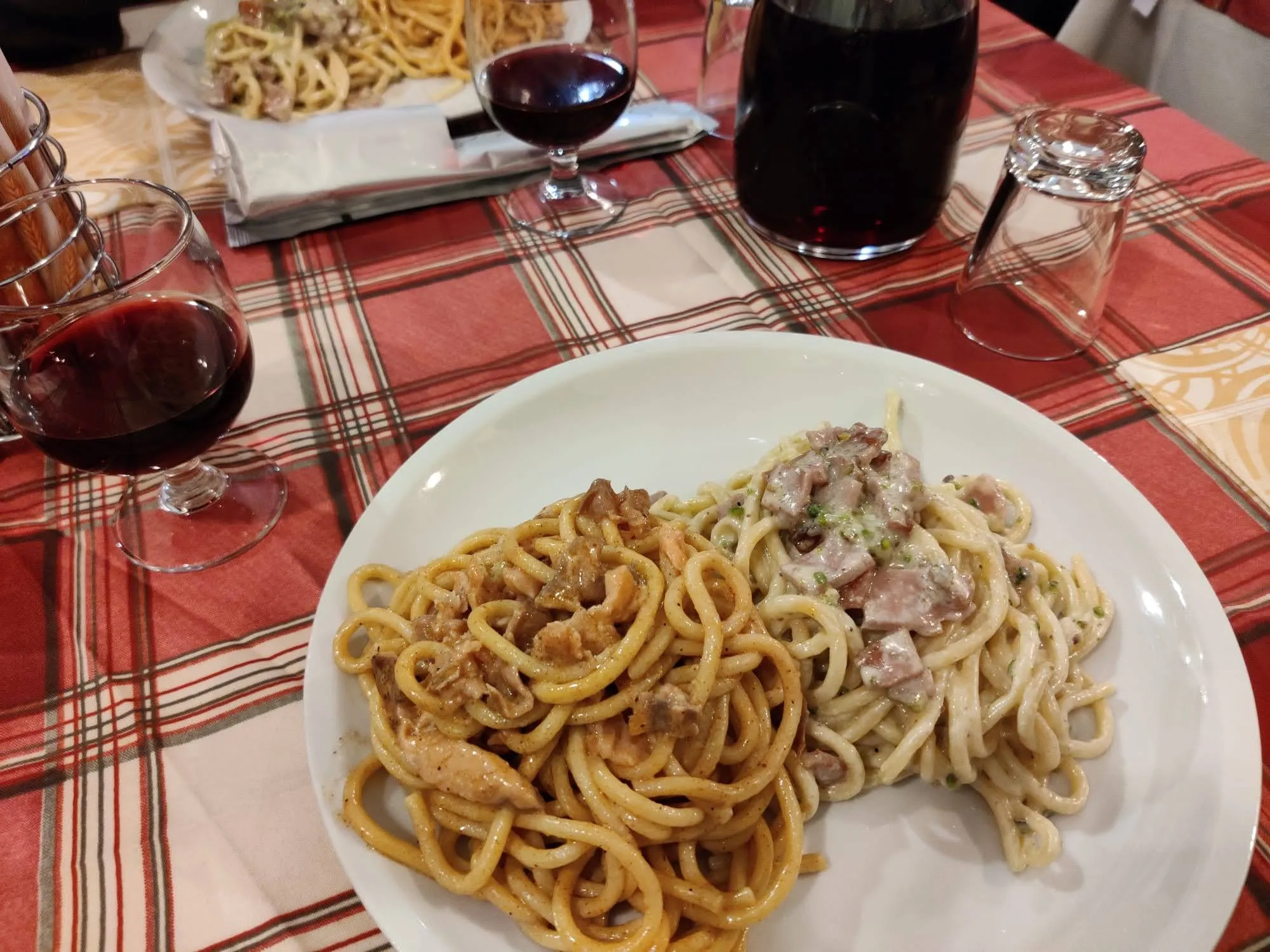
In Lazio, the capital’s cucina romana has given the world Pasta alla Carbonara: rigatoni or spaghetti coated in a silky emulsion of egg yolk, Pecorino Romano DOP, guanciale (cured pork cheek), and black pepper. No cream. Never cream. The creaminess comes entirely from the technique of combining hot pasta water with fat and egg. This distinction matters enormously to anyone serious about authentic Italian food recipes by region.
Southern Italy: Sun-Kissed Tomatoes, Olive Oil, and Seafood
Head south and the pantry shifts dramatically. Olive oil replaces butter entirely. Tomatoes, eggplant, capers, anchovies, and fresh seafood dominate. The Mediterranean diet — celebrated globally for its health benefits — was essentially codified in the kitchens of Campania, Calabria, Sicily, and Puglia.
Pizza Napoletana from Campania is perhaps the world’s most famous Italian export. A true Neapolitan pizza uses a few specific ingredients: double-zero flour dough, San Marzano tomatoes from the volcanic plains near Mount Vesuvius, fior di latte or buffalo mozzarella, and a wood-fired oven reaching 450–500°C. It bakes in 60–90 seconds. The result is soft, slightly charred, and nothing like the thick, heavily loaded versions common abroad.
In Sicily, arancini — fried rice balls stuffed with ragù, peas, and caciocavallo cheese — reflect the island’s layered history, with Arab, Norman, and Spanish influences all visible in a single dish.
Ready to plan your trip?
Let's design your perfect Italian wine experience
Every tour is tailor-made. Reach out and we'll craft an itinerary that fits your pace, your tastes, and your story.
The Italian Pantry: Sourcing Essential Ingredients
One reason authentic Italian dishes taste so different at home is ingredient quality. Italian cooks are famously particular about what goes into the pot, and for good reason. The good news is that many of Italy’s finest products are available internationally — if you know what to look for.
The key labels to understand are DOP (Denominazione di Origine Protetta — Protected Designation of Origin) and IGP (Indicazione Geografica Protetta — Protected Geographical Indication). These European Union certifications guarantee that a product was made in a specific place, using traditional methods. They are your assurance of quality and authenticity.
Here are the essential authentic Italian ingredients to buy and keep stocked:
- Extra Virgin Olive Oil: Look for cold-pressed, single-origin bottles with a harvest date. Avoid generic blends.
- San Marzano Tomatoes DOP: Grown in the volcanic soil near Naples. The flavor is sweeter and less acidic than standard canned tomatoes. Essential for pizza and slow-cooked sauces.
- Parmigiano Reggiano DOP: Aged a minimum of 12 months (24+ months for richer flavor). Buy a wedge and grate it fresh. Pre-grated powder is not a substitute.
- Prosciutto di Parma DOP: Dry-cured ham from Emilia-Romagna, aged at least 12 months. Sweet, delicate, and nothing like standard deli ham.
- Aceto Balsamico Tradizionale di Modena DOP: True traditional balsamic vinegar is aged 12–25 years in wooden barrels. It is thick, complex, and used in drops, not poured freely. Commercial balsamic bearing this label is a completely different product.
- Dried Pasta: Look for pasta made with durum wheat semolina (semola di grano duro) and bronze-die extruded (trafilata al bronzo), which gives it a rough texture that holds sauce beautifully.
The Structure of a Traditional Italian Meal
One of the most misunderstood aspects of Italian dining is how a meal is actually structured. In Italy, eating is not a quick transaction — it is a ritual with a clear sequence, each course serving a specific purpose.
A full traditional Italian meal unfolds as follows:
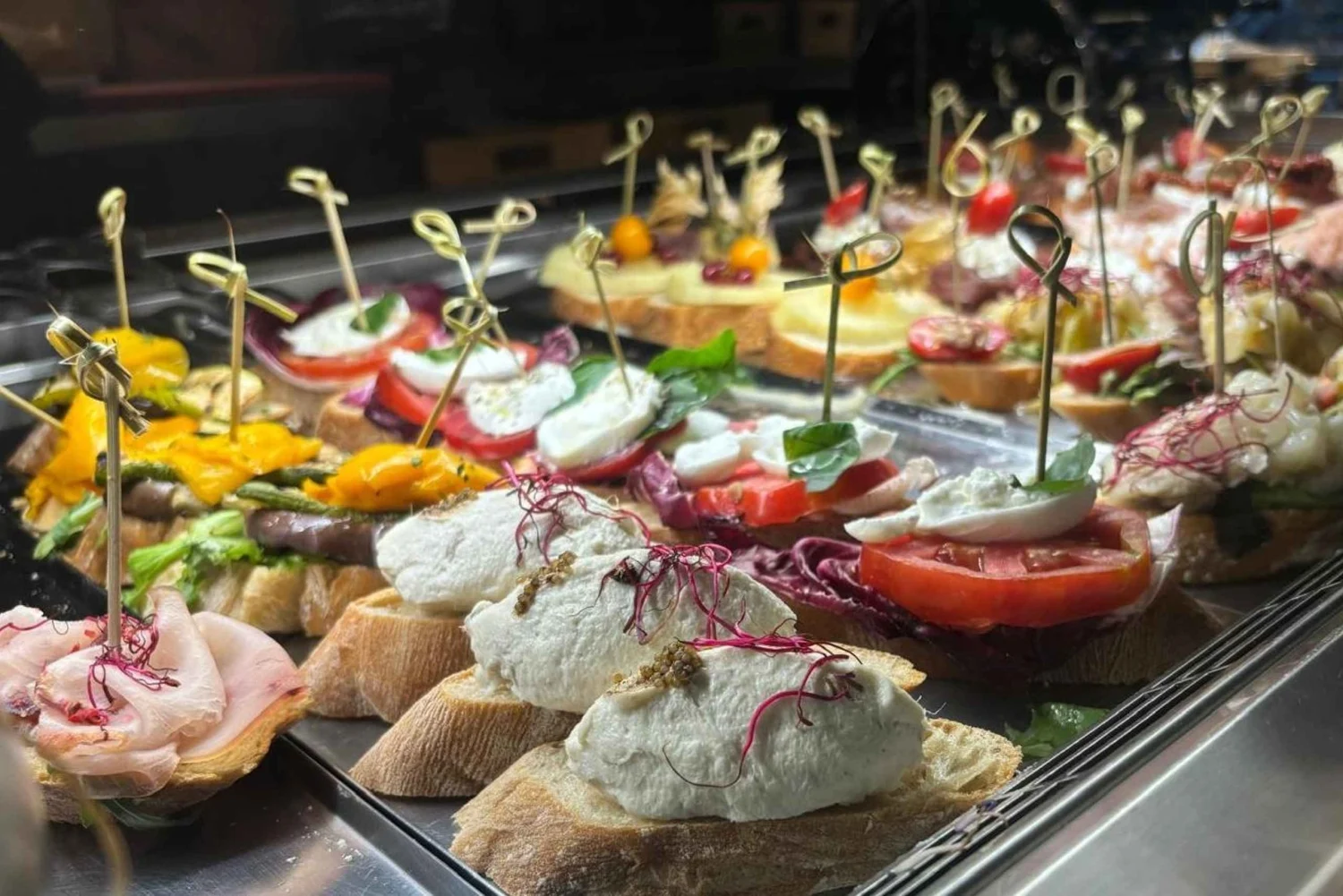
- Antipasto (“before the meal”): Cured meats, marinated vegetables, bruschetta, or seafood. Light and appetite-opening.
- Primo (“first course”): Pasta, risotto, gnocchi, or soup. This is a carbohydrate course, not the main event.
- Secondo (“second course”): Meat, fish, or poultry. Served on its own, without sauce or sides already plated.
- Contorno (“side dish”): Vegetables or salad, ordered separately and eaten alongside the secondo.
- Dolce: Dessert — a slice of tart, a panna cotta, a few biscotti.
- Caffè: A short, strong espresso. Never a cappuccino after noon, by Italian convention.
- Digestivo: A small glass of grappa, limoncello, or amaro to close the meal.
Not every meal includes every course — weekday lunches might be just a primo and a contorno. But understanding this structure explains why ordering pasta as a “main course” in Italy will earn a puzzled look from your waiter.
How to Spot an Authentic Italian Restaurant Anywhere
Whether you’re traveling through Italy or dining at an Italian restaurant in your own city, a few reliable signals separate the genuine from the generic.
Look for a short, seasonal menu. Authentic Italian restaurants change their offerings based on what’s available. A menu with 60 items is a red flag — it suggests most things come from a freezer.
Check for regional coherence. A real Italian restaurant tends to have a culinary identity rooted in a specific region. If the menu jumps from Carbonara to Pizza Napoletana to Risotto alla Milanese to Sicilian caponata with no apparent logic, it’s likely catering to a generic idea of “Italian food” rather than any real tradition.
Pay attention to Italian terminology. Knowledgeable restaurants use primi for pasta and risotto courses and secondi for meat and fish. If pasta is listed under “main courses,” the kitchen may not be thinking in Italian culinary terms.
Notice what’s NOT on the menu. Chicken Parmesan, spaghetti and meatballs, and fettuccine Alfredo (as commonly made outside Italy) are absent from menus in Italy. Their presence abroad isn’t necessarily a mark against a restaurant, but their absence is often a mark in favor of one.
Ask about the olive oil. A kitchen that cares about ingredients will use a quality extra virgin olive oil and will likely know where it comes from.
Bringing It All Together
Authentic Italian food is not a fixed list of dishes. It is a living, breathing approach to eating — one that prizes the quality of individual ingredients over complexity, honors the traditions of specific places, and understands that a meal is as much about time and company as it is about what’s on the plate.
Whether you’re cooking at home with DOP ingredients sourced from a specialty shop, sitting down to a long Sunday lunch with a full menu progression, or choosing a trattoria based on its handwritten seasonal board, you are participating in something genuinely Italian. That is the real tradition — not a particular recipe, but a way of thinking about food.
Start simply. Buy good olive oil. Learn one regional recipe well. Then another. Italy’s culinary map is vast, and every corner of it rewards curiosity.
Ready to go deeper? Browse our regional guides on Slow Italy for itineraries built around local markets, family-run trattorias, and the artisan producers keeping these traditions alive — one honest plate at a time.
Ready to plan your trip?
Let's design your perfect Italian wine experience
Every tour is tailor-made. Reach out and we'll craft an itinerary that fits your pace, your tastes, and your story.